
Charles T. Russell
1925
14 W. Duval St.
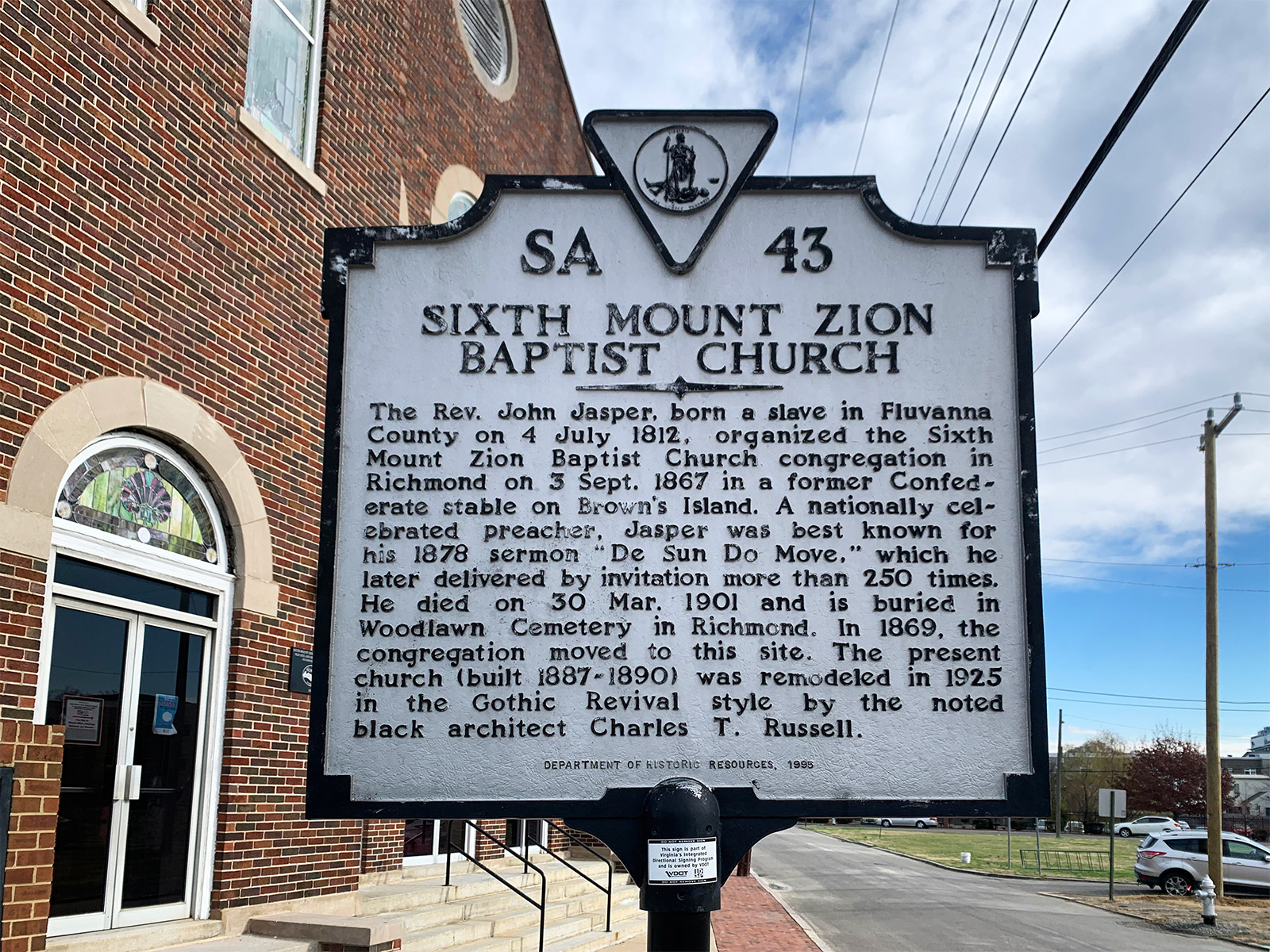
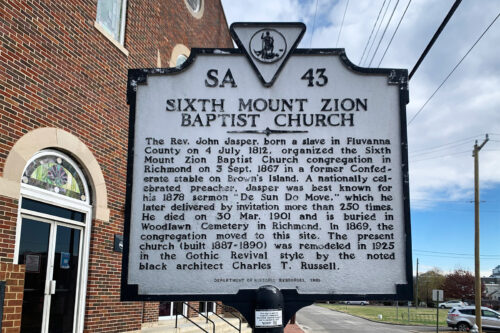
Sixth Mount Zion Baptist Church is one of Richmond’s most significant churches. Founded on September 3rd, 1867, the congregation first met in a former Confederate horse stable on Brown’s Island under the leadership of the Reverend John Jasper. Jasper became an acclaimed preacher, lecturing often throughout the eastern United States. Today, he is best remembered for his sermon “De Sun Do Move,” which he delivered more than 250 times, including in front of audiences in London, Paris, and the Virginia General Assembly. In 1926, the church established the John Jasper Memorial Room and Museum to preserve his legacy.
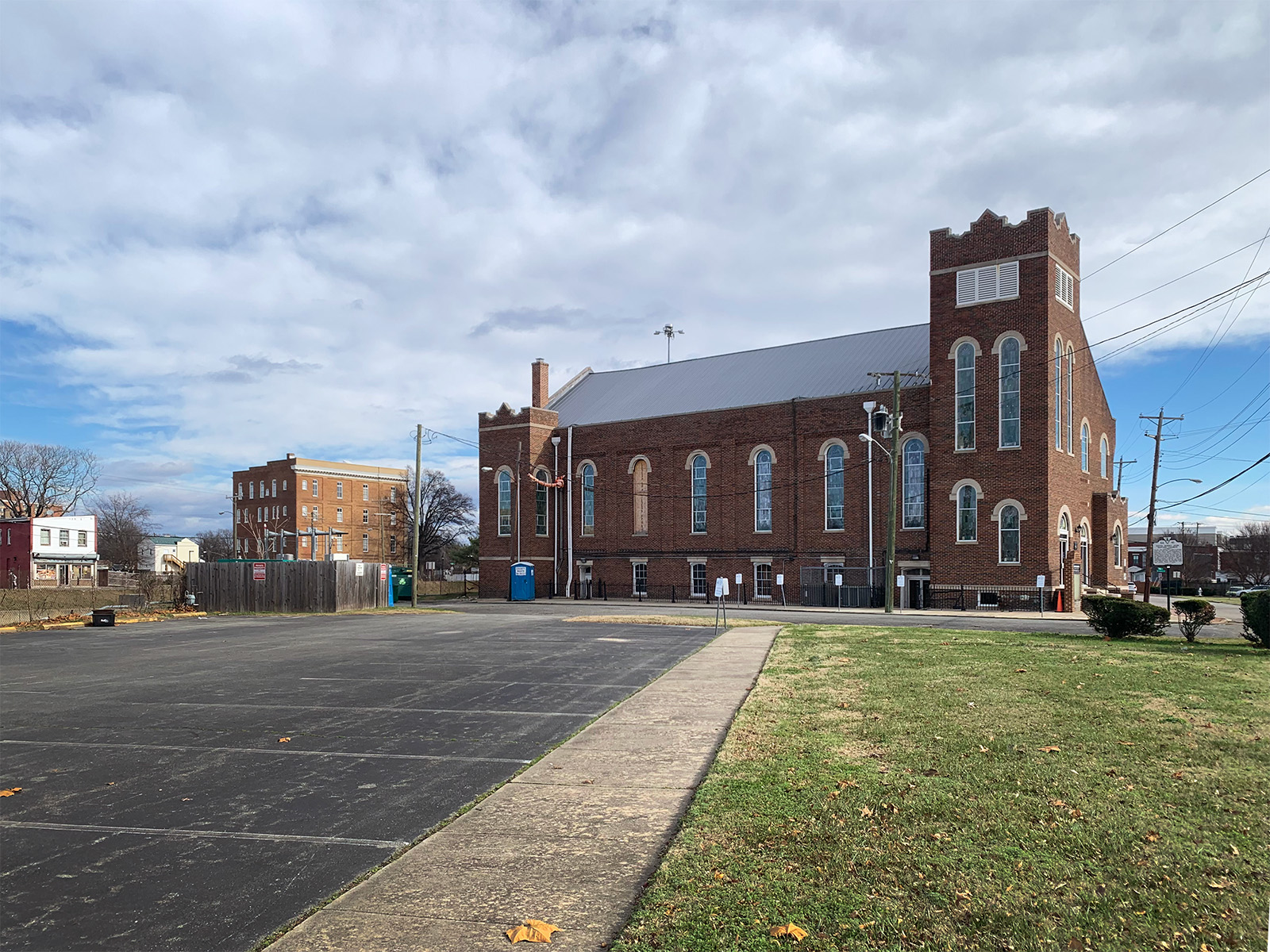
In 1869, the congregation relocated to 14 Duval Street in Jackson Ward, where it remains. Contractor George W. Boyd constructed the sanctuary that forms the core of the present church in the 1880s. Boyd was among the most prominent Black builders in late nineteenth century Richmond.
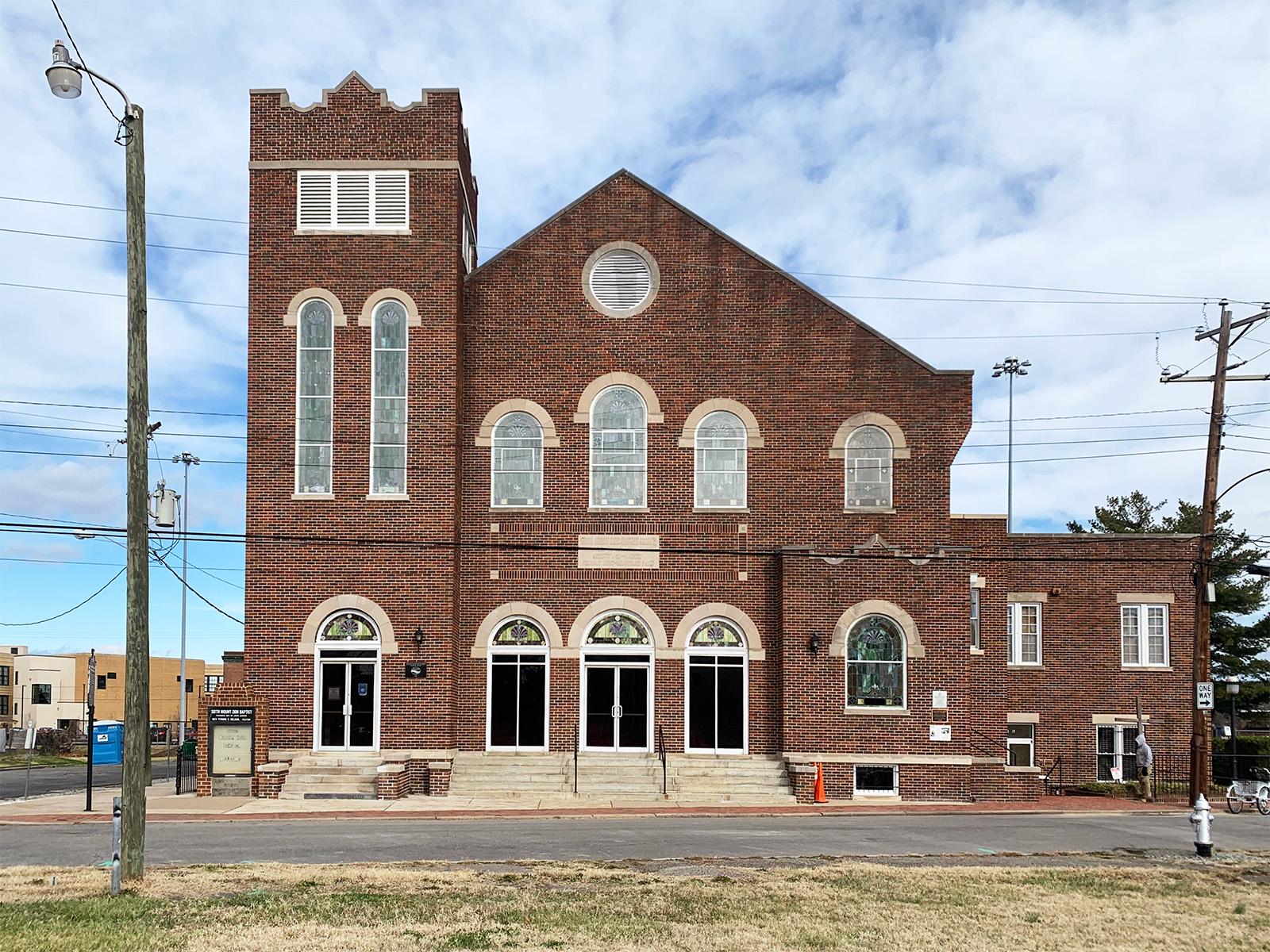
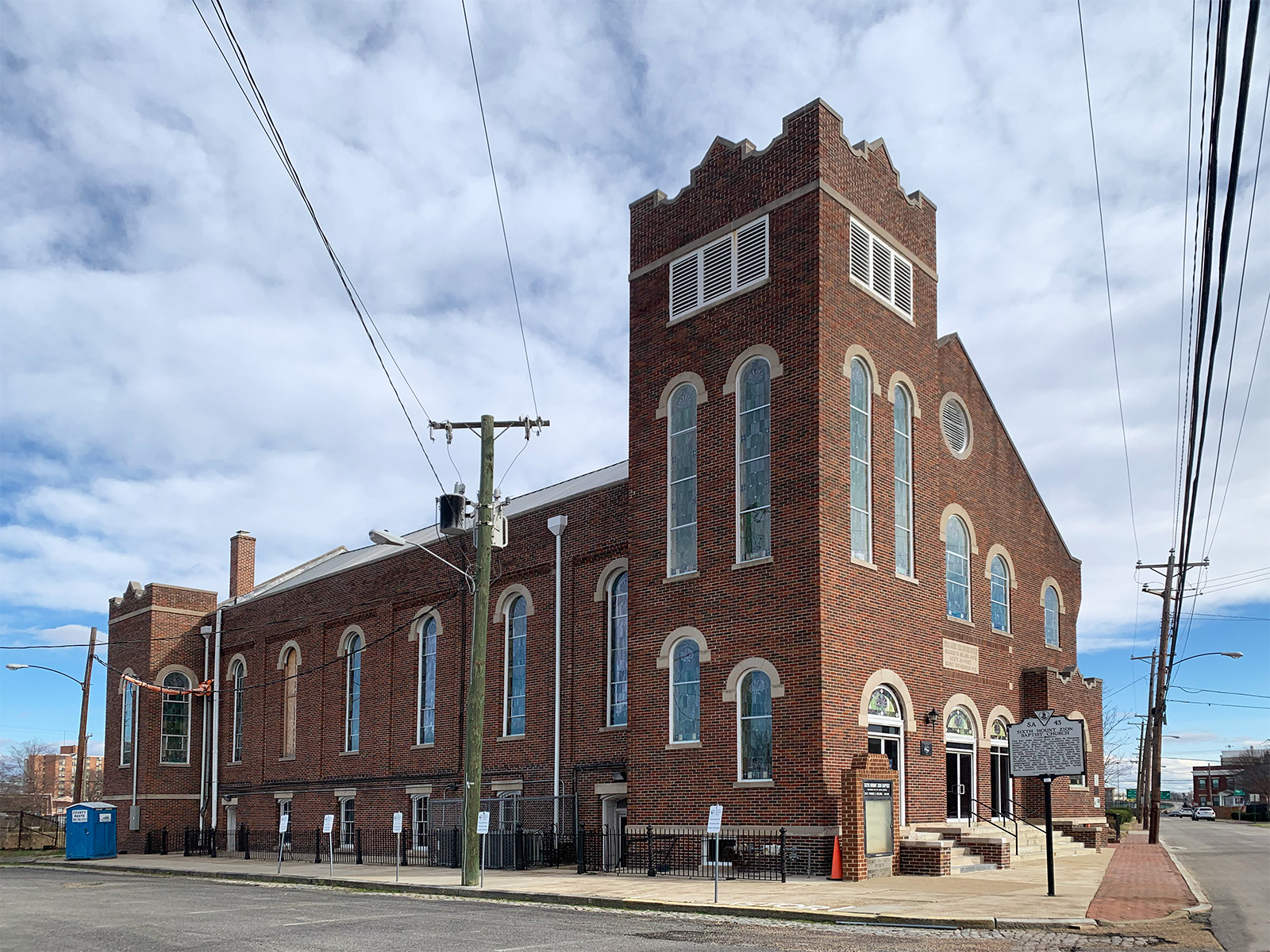
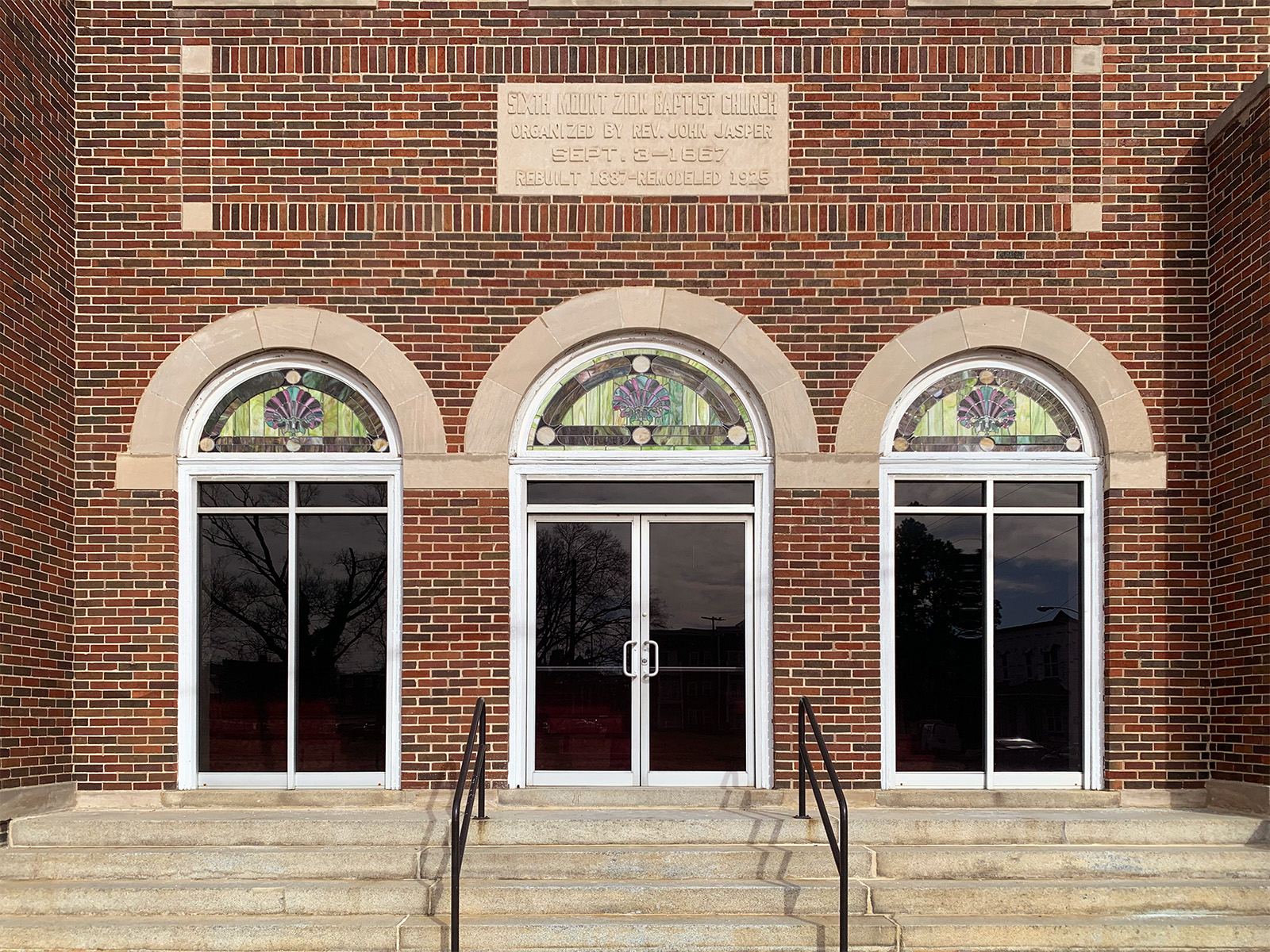
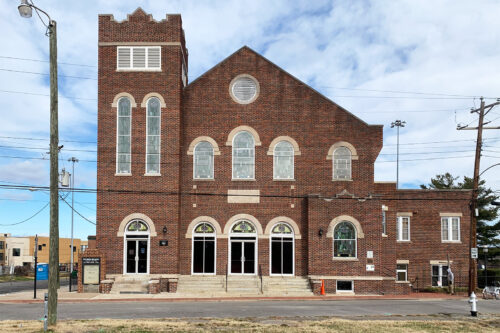
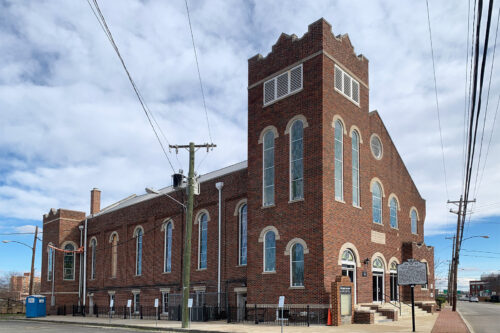
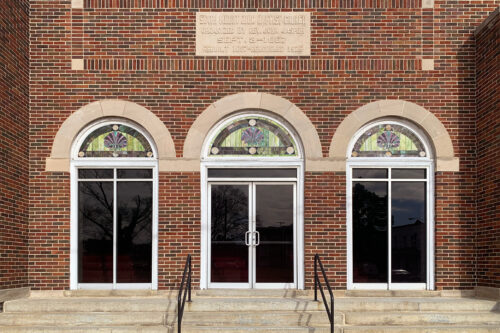
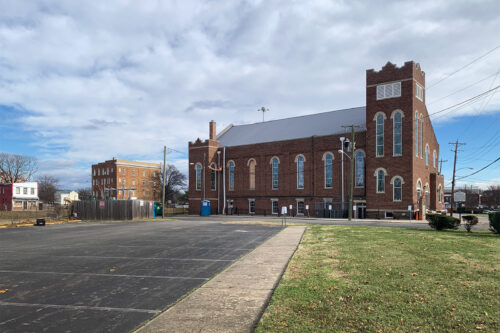
In 1925, Richmond architect Charles Thaddeus Russell remodeled and expanded the church. Russell’s façade combines Romanesque and Gothic elements, with tall rounded arches, a crenellated bell tower, and a symmetrical three-bay entrance. The slightly elevated central arch, together with the stone inscription and ornament above it, recalls the form of a triumphal arch. Russell’s expansion also added an educational wing, the first of its kind at an African American church in Richmond.
Born in Richmond in 1875 and raised in Jackson Ward, Russell studied at Hampton Institute before becoming a carpentry instructor at Tuskegee Institute in 1901. He later worked on the campus of Virginia Union University and established himself as an architect. In 1922, Russell and John A. Lankford became the first two licensed African American architects in Virginia. Russell’s other projects included the St. Luke’s Savings Bank Building on 1st street (now demolished), Ebenezer Baptist Church, and supervising the relocation and reconstruction of the Belgian Friendship Building at Virginia Union University, originally designed by modernist architect Henry van de Velde as the Belgian Pavilion at the 1939 World’s Fair in New York. (Those interested in the fascinating, complex story of this building can consult the excellent recent book The Belgian Friendship Building: From the New York World’s Fair to a Virginia HBCU by Kathleen James-Chakraborty, Katherine M. Kuenzli, and Bryan Clark Green.)
Sixth Mount Zion narrowly survived the construction of the Richmond-Petersburg Turnpike, now Interstate 95, through Jackson Ward. Pastor Augustus Walter Brown successfully fought plans to demolish the church, although the highway remains a physical scar through the neighborhood. Current proposals to cap portions of the highway with buildings or parkland seek to repair some of that historic damage.
Now listed on the National Register of Historic Places, Sixth Mount Zion is both a landmark and an active community institution. Its ministries include a food pantry, youth and family services, senior assistance, health and fitness programs, arts initiatives, social justice work, and financial empowerment. The church remains central to the of Jackson Ward more than 150 years after its founding.
DOK

Write a Comment