The Source for Richmond Architecture and Design Information

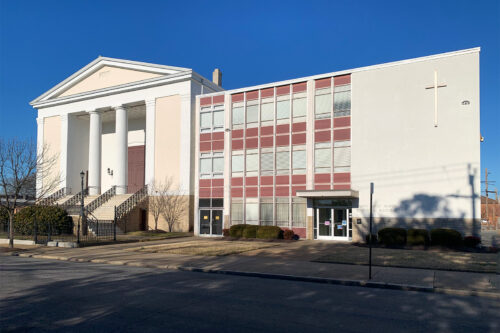
Fourth Baptist Church

Ethel Bailey Furman (addition) 1884 sanctuary, 1964 addition by Furman 2800 P Street From the grand gothic cathedrals at Chartres and Canterbury to the more earthly scale of an average American parish, church buildings have always changed with time and with the shifting needs of their congregations. Once the main sanctuary is complete, common additions …
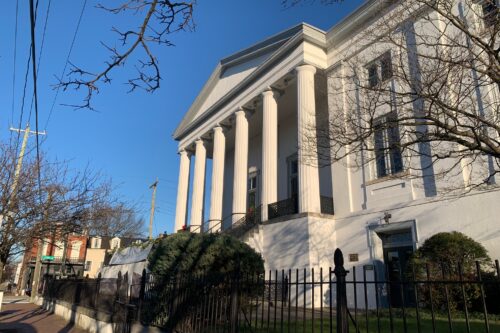
Church Hill Presbyterian Church

Samuel Sloan, architect 1853 and additions 1911, 1917 and 1930 additions 500 N. 25th St.   As you travel through many cities and towns in the mid-Atlantic and northeastern states, it’s hard not to be struck by the steeples of nineteenth and early 20th century churches that rise majestically above what were once densely-built residential …

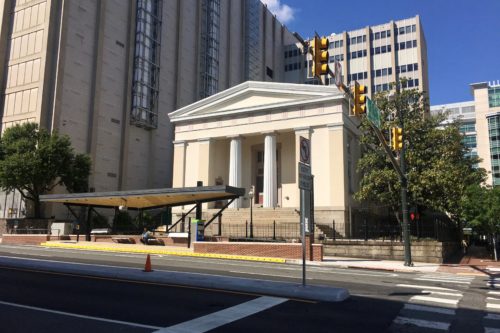
Hunton Student Center, Virginia Commonwealth University

Thomas Ustick Walters; 2007 restoration by Einhorn Yaffee Prescott, Architects and Engineers, P.C. 1841 1200 block East Broad Street In Court End, a district that boasts many architecturally distinguished buildings and many on the National Register of Historic Places, the Hunton Student Center is an elegant stand-out. This former church-turned student activities building was designed …

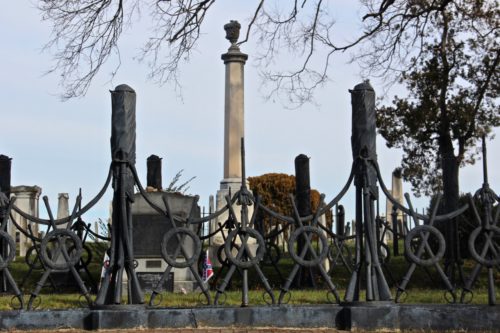
Hebrew Cemetery

1816 400 Hospital Street Beth Shalome, the oldest Jewish congregation in Virginia, founded the Hebrew Cemetery on Shockoe Hill in 1816. The congregation had outgrown its existing burial ground which remains at its original site near 21st and Franklin Streets in Shockoe Bottom. The new burial ground predates the neighboring Shockoe Hill Cemetery by eight years. …

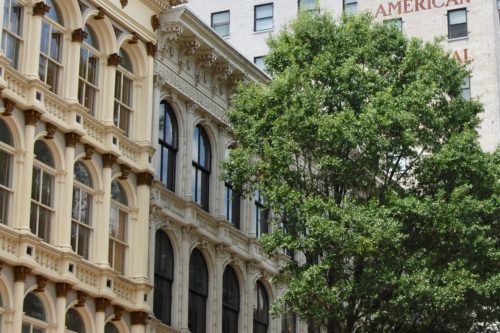
The Ironfronts

George H. Johnson, architect 1866 Glave Newman Anderson Architects (restoration and adaptive reuse, 1976) 1007-1011 E. Main St. The Ironfronts building played an important part in the drama of Richmond’s rebuilding efforts after a devastating fire in April 1865 that destroyed some 800 buildings in the heart of the Confederate capital city. However, to understand …

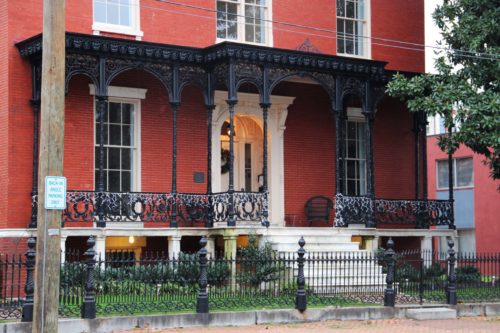
Pace-King Mansion

1860 205 N. 19th St. The Pace-King Mansion sits in Shockoe Bottom, the bustling urban district anchored by the 17th Street Farmer’s Market. Richmond got its start here, and successive waves of growth have radiated outward. Despite centuries of change, including the explosion of commercial construction around the turn of the 20th century, some relics …

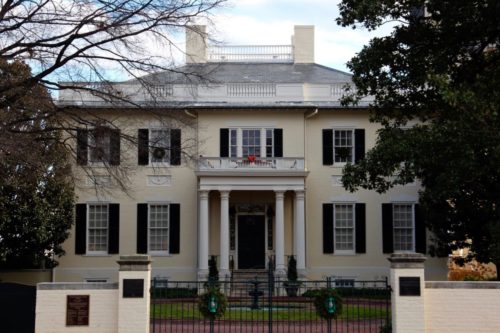
Executive Mansion

Capitol Square Alexander Parris and W. Duncan Lee (rear addition) 1811. Rear addition, 1906. Gov. John Barbour moved into the Executive Mansion, situated in the northeastern corner of Capitol Square, in 1811. Today it is still the home of Virginia’s governor, making it the nation’s oldest official gubernatorial residence in continuous use. The house was …

Richmond Public Library Park

Northwest corner of East Main and North Second streets Barry Starke 1972. 1998, redesigned Monroe Ward (the downtown district defined by Broad, Foushee and Belvidere streets and the James River) boasts some of Richmond’s most iconic architectural treasures: the Jefferson Hotel, the Commonwealth Club and Linden Row. What the neighborhood lacks however, is green space. …

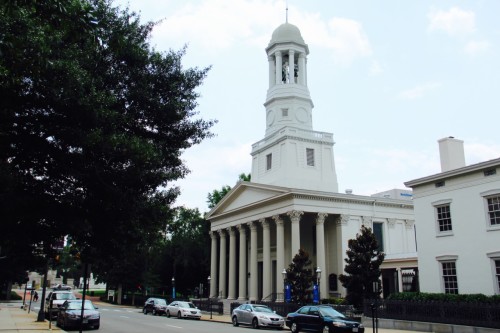
St. Paul’s Episcopal Church

Thomas S. Stewart 1843-1845. 1890, alterations to sanctuary. 1959, parish house and parking garage, Baskervill and Son. 1992 renovation to parish house. 815 East Grace Street St. Paul’s, with its grand and prominent location immediately across Ninth Street from the vehicular gateway to Capitol Square, spectacular temple front in the Corinthian order of architecture, and …

Shockoe Hill Cemetery

1822 4th and Hospital Streets As the 18th century drew to a close, space grew scarce in St. John’s Churchyard, Richmond’s de facto resting place. Anticipating this demand, the City of Richmond invested in property in an underdeveloped area north of the Court End section of downtown, then a fashionable residential area. The site sat …